Research
last edited on 13th January 2015
- Overview
- Grassland biodiversity
- Agricultural landscapes
- BEFMate project
- Urban ecosystems
- Spatial Scaling
- Conservation Ecology
- Grassland Management
- Climate Change
- Biodiversity Exploratories
- Forest biodiversity
- Peat Bog Ecosystems
- Senecio inaequidens
- Tropical Ecosystems
- Side-Projects
Overview of research projects
A central theme in my research is the diversity of life on earth ("biodiversity"). In particular, I am interested in the effects of changes in biodiversity on ecosystem processes such as plant-insect interactions and herbivory, and how biodiversity loss can be counteracted.
In addition, I am studying anthropogenic environmental changes (climate and habitat changes) in a variety of ecosystems such as grassland, arable land/cropland, heathland, beech forests, and peat bog ecosystems.
In particular, theory-based smaller-scale experiments and applications in nature conservation on a landscape scale are combined.
Most recent updates
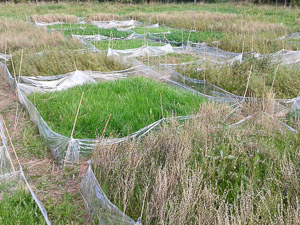
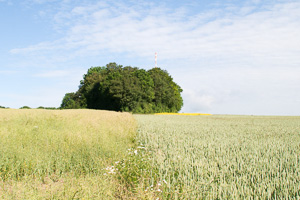
left: Newly sown biodiversity experiment in Göttingen (MSc thesis Niklas Krummel)
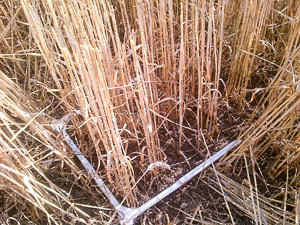
right: Wheat harvest to study effects of field margin structures on crop yield (BSc thesis Nina Bacchi)
Large-scale experimental approaches
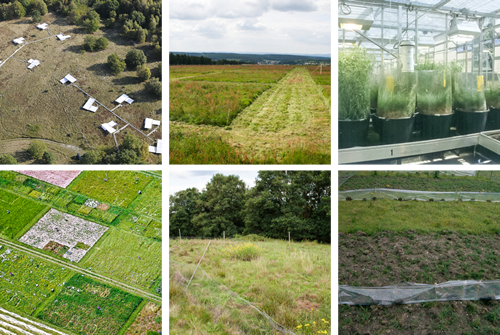
From top left to bottom right: "Climaite" experiment (Denmark; copyright: T. N. Mikkelsen); GrassMan experiment; Greenhouse experiments in Silwood Park; The Jena Experiment (copyright: C. Scherber, A. Weigelt, W. Voigt & The Jena Experiment); Rabbit exclosure in Silwood park; Caterpillar exclosure in Silwood park. All other images by C.Scherber.
Study habitats
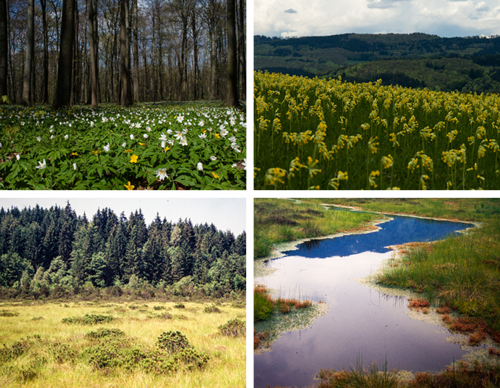
From top left to bottom right: Forest ecosystems (Hainich National Park); Calcareous grassland (Meissner-Kaufunger Wald); Peat bog ecosystems (bottom row, Southern Bavaria). All images by C. Scherber.
Cage experiments with insects
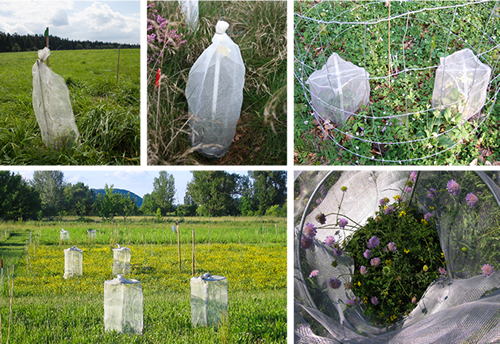
From top left to bottom right: Lysimeter plant-herbivore study in a grassland management & biodiversity removal experiment; Grasshopper cage in a climate change experiment;
Pollinator cages in the Hainich National Park; Grasshopper cages in the Jena Experiment; Interior of a grasshopper cage inthe Jena Experiment. All images by C. Scherber except top right by E. Vockenhuber.
Study organisms
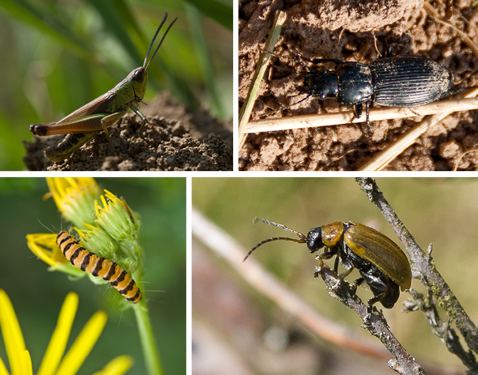
From top left to bottom right: Meadow grasshopper, Chorthippus parallelus; Common black ground beetle, Pterostichus melanarius; Cinnabar moth, Tyria jacobaeae; Heather beetle, Lochmaea suturalis. All images by C. Scherber.
Research wouldn´t be possible without a fabulous group of PhD students
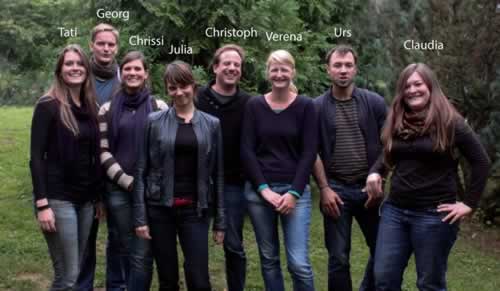
from left to right: Tatiane Beduschi, Georg Everwand, Christine Venjakob, Julia Tiede, Christoph Scherber, Verena Rösch, Urs Kormann and Claudia Normann. Not on this picture yet: Kristy Udy, Hannah Reininghaus.
Research on grassland biodiversity
MSc student: Niklas Krummel; PhD student: Julia Tiede
We are currently setting up a new small-scale grassland biodiversity experiment in Göttingen. This research complements approaches used within the framework of the Jena Experiment, a large long-term biodiversity experiment (see below).
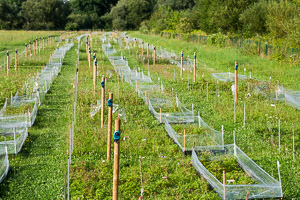
The Jena Experiment
Within a large and long-term biodiversity experiment, we study:
(1) How plant diversity affects the diet of carnivores, herbivores and omnivores
(2)
Effects of plant diversity on flower traits and pollination along an experimental plant diversity gradient
At current, this involves the use of next-generation DNA sequencing approaches (pyrosequencing) to study how the diets of omnivorous Carabid beetles changes with plant diversity, plant species identity and plant traits. For this purpose, we collaborate with the research groups of Michael Traugott (Innsbruck) and Rolf Daniel (Göttingen).
In addition, we plan to study plant-seed predator and continue to study plant-pollinator interaction networks, with a focus on spatiotemporal niche differentiation.
PhD students: Julia Tiede (2013-2016) and Christine Venjakob (2010-2013)
MSc students: Juliane Heimann (maiden name: Juliane Specht, 2006)
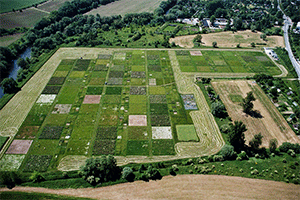
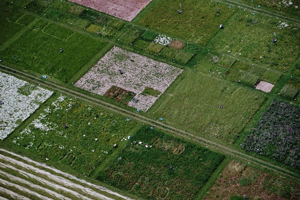
Past research (2003-2010) has focused on multitrophic responses as a function of plant species richness.
Biodiversity positively affects ecosystem services
A particularly interesting finding is that plant species richness positively affects ecosystem services important for human well-being. These services include:
- weed suppression and invasion resistance
- decomposition
- parasitism and biological control
- flower visitation and pollination
- resistance against plant pathogenic fungi
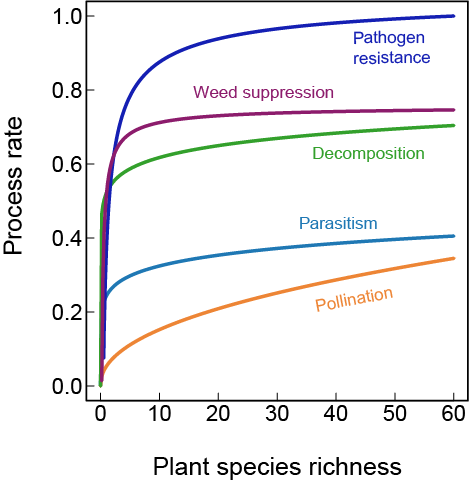
(modified from Scherber et al., Nature)
Plants form the basis of terrestrial food webs
Our research has shown that changes in plant biodiversity affects above- and belowground trophic interactions, with effects dampening the higher you climb the "trophic ladder".
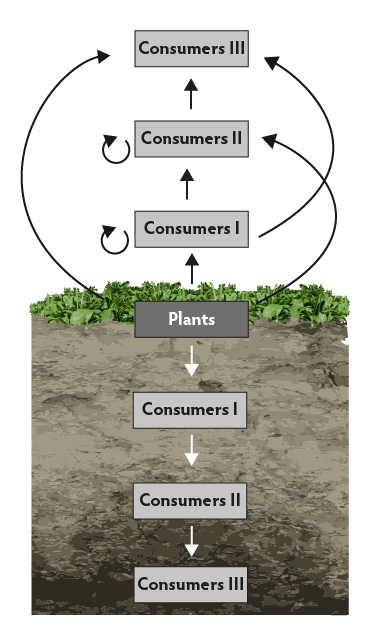
Above-belowground interactions are modified by changes in plant biodiversity
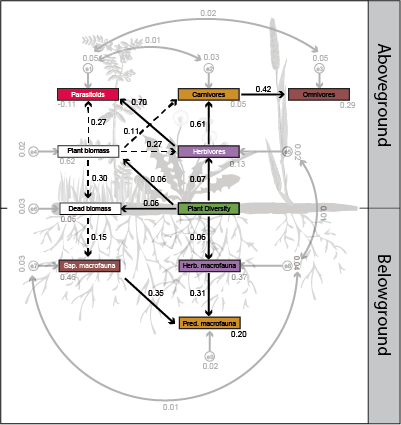
(modified from
Scherber et al., Nature)
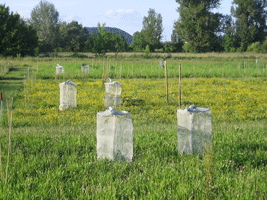
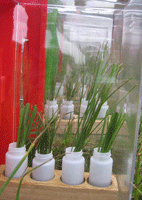
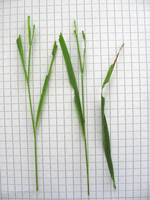
The Jena Experiment is a multidisciplinary, long-term research facility to study the effects of changes in plant species richness on ecosystem processes. For example, we are interested in the effects of plant species richness on processes at higher trophic levels. One central research question during the last years has been: Are plant monocultures more susceptible to herbivore attack than plant mixtures?
Selected publications:
Bottom-up effects of plant diversity on multitrophic interactions in a biodiversity experiment
published online 27th October 2010; see also Supplementary material S1 and S2
by Scherber C, Nico Eisenhauer, Wolfgang W. Weisser, Bernhard Schmid, Winfried Voigt, Markus Fischer, Ernst-Detlef Schulze, Christiane Roscher, Alexandra Weigelt, Eric Allan, Holger Beßler, Michael Bonkowski, Nina Buchmann, François Buscot, Lars W. Clement, Anne Ebeling, Christof Engels, Stefan Halle, Ilona Kertscher, Alexandra-Maria Klein, Robert Koller, Stephan König, Esther Kowalski, Volker Kummer, Annely Kuu, Markus Lange, Dirk Lauterbach, Cornelius Middelhoff, Varvara D. Migunova, Alexandru Milcu, Ramona Müller, Stephan Partsch, Jana S. Petermann, Carsten Renker, Tanja Rottstock, Alexander Sabais, Stefan Scheu, Jens Schumacher, Vicky M. Temperton & Teja Tscharntke (2010)
Nature 468, 553–556 (25 November 2010) (published online 27th October 2010), DOI: dx.doi.org/10.1038/nature09492
Functional identity versus species richness: herbivory resistance in plant communities
by Scherber C, Heimann J, Köhler G, Mitschunas N, Weisser WW (2010)
Oecologia (online first), DOI: http://dx.doi.org/10.1007/s00442-010-1625-1© Springer (Open Access by institutional agreement)
by Scherber C, Mwangi PN, Schmitz M, Scherer-Lorenzen M, Beßler H, Eisenhauer N, Migunova VD, Weisser WW, Schulze ED, Schmid B (2010)
Journal of Plant Ecology 3 (2): 99-108, DOI: http://dx.doi.org/10.1093/jpe/rtq003
Diversity and beyond: Plant functional identity determines herbivore performance
by Specht J, Scherber C, Koehler G, Weisser WW (2008)
Journal of Animal Ecology 77, 1047–1055, DOI: http://dx.doi.org/10.1111/j.1365-2656.2008.01395.x
by Scherber C, Milcu A, Partsch S, Scheu S, Weisser, WW (2006)
Journal of Ecology 94, pp. 922-931, Blackwell Publishing, Oxford, DOI: http://dx.doi.org/10.1111/j.1365-2745.2006.01144.x
Effects of plant diversity on invertebrate herbivory in experimental grassland
by Scherber C, Mwangi PN, Temperton VM, Roscher C, Schumacher J, Schmid B, Weisser WW (2006)
Oecologia 147, pp. 489-500, Springer Berlin, Heidelberg, New York. DOI: http://dx.doi.org/10.1007/s00442-005-0281-3
- For additional information, see the Jena Experiment homepage.
Effects of hedgerows on crop yield
BSc student: Nina Bacchi
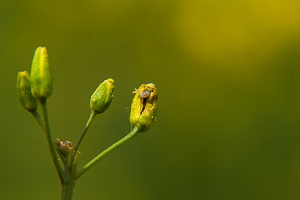
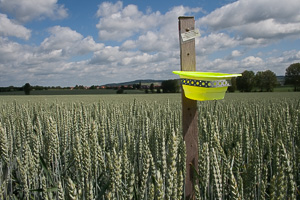
Within the framework of a BSc thesis, we measure effects of different types of field margins on yield of crops (oilseed rape, wheat). We test the hypothesis that field margin type influences yield, e.g. via enhanced biological control or altered microclimate.
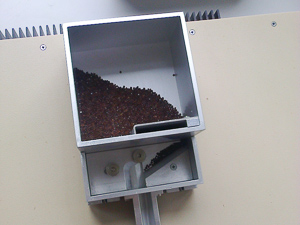
In contrast to previous studies, we harvest whole plants and collect seeds using threshing machines and seed cleaning machinery. This will give insights into yield components that are relevant from a farmer´s perspective.
Multitrophic interactions in agricultural landscapes
PhD students: David Gladbach, Urs Kormann, Tatiane Beduschi
MSc students: Marie Zahnert, Sarah Lenze, Marieke Neßmann
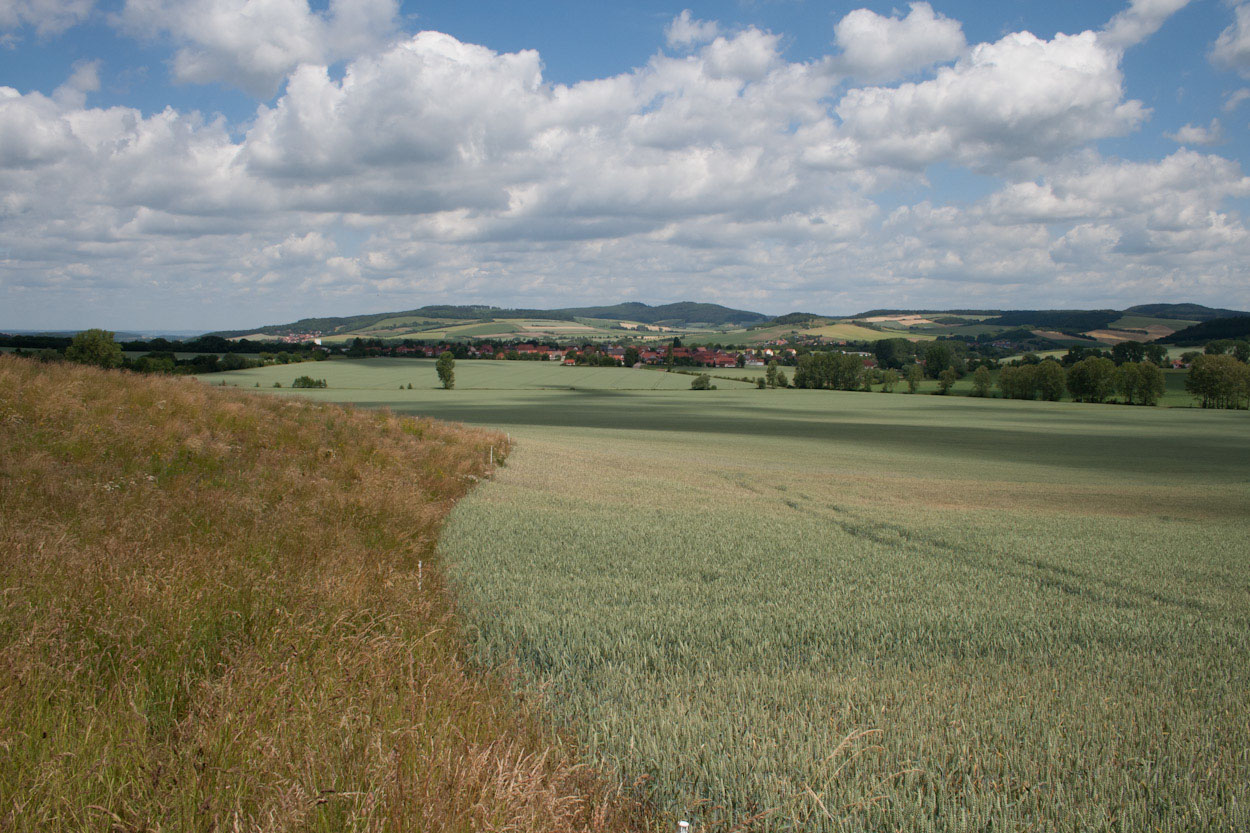
Since 2006, we are studying multitrophic interactions in agricultural landscapes using a variety of approaches and experimental designs. Projects involved are the EU-funded project "Agripopes", the Helmholtz funded project "BESS" and the DFG-RTG 1644 "Scaling problems in statistics".
A grid-based sampling approach for landscape-wide biodiversity
We have developed new approaches to study lanscape-wide changes in biodiversity of different organism groups. Using replicated landscapes, we show that biodiversity dynamics in space and time can best be understood when all available habitats are sampled (rather than focusing just on managed or seminatural areas).
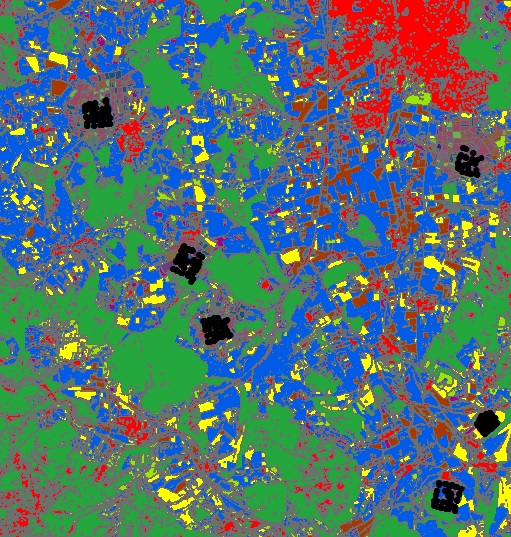
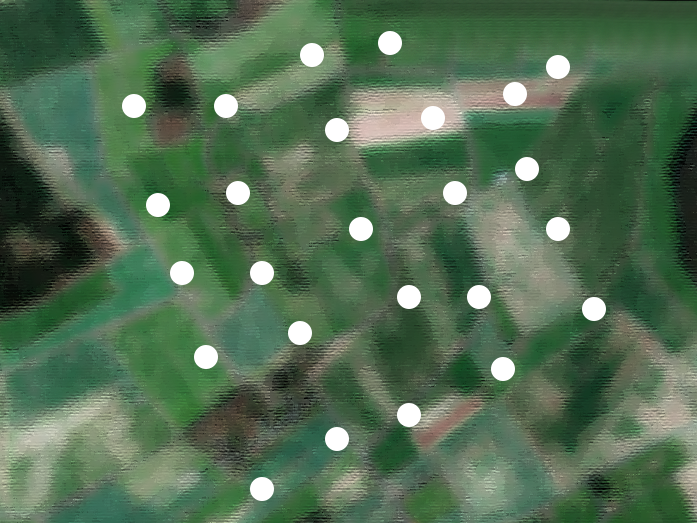
Image recognition software (ENVI EX) was used for landscape-wide habitat classification based on false-colour infrared images from the RapidEye satellite. In each of 10 landscapes (size 1x1 km), we then established regular sampling grids with 25 sampling locations. At each sampling location, we measured parameters such as vegetation composition, herbivorous beetle abundance and pollinator abundance.
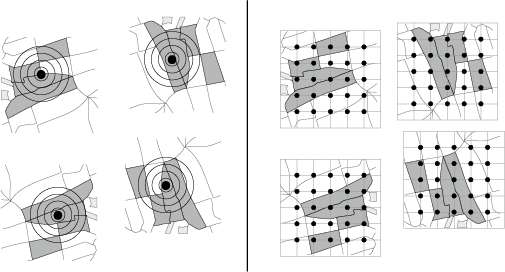
Traditionally, landscape context has been measured using a "concentric circles" approach. Such an approach is inadequate in many cases. A grid-based sampling, shown on the right, allows sampling all habitats occurring in a landscape (modified from Scherber et al. 2012)
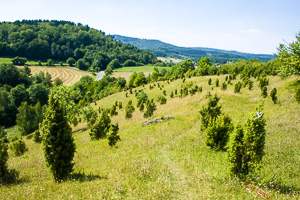
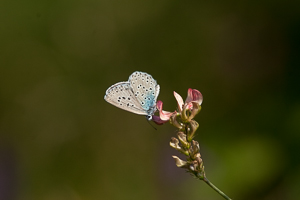
Research on butterflies, plants and leafhopper communities in calcareous grasslands
In collaboration with the Naturpark Meißner-Kaufunger Wald, we study plants, butterflies and leafhopper communities and how they are affected by land-use intensity. Using transect approaches, we study gradients ranging from the centre of each calcareous grassland out into other surrounding habitat types.
Most recent publications:
by Rösch V, Tscharntke T, Scherber C, Batáry P (2013) Landscape composition, connectivity and fragment size drive effects of grassland fragmentation on insect communities.
Journal of Applied Ecology50:387–394.
DOI: http://dx.doi.org/10.1111/1365-2664.12056
Landscape moderation of biodiversity patterns and processes - eight hypotheses
by Tscharntke T, Tylianakis J, Rand T, Didham R, Fahrig L, Batary P, Bengtsson J, Clough Y, Crist T, Dormann C, Ewers R, Holt R, Holzschuh A, Klein A, Kremen C, Landis D, Laurance W, Lindenmayer D, Scherber C, Sodhi N, Steffan-Dewenter I, Thies C, van der Putten W, Westphal C (2012)
Biological Reviews (published online 24th January 2012)
DOI: http://dx.doi.org//10.1111/j.1469-185X.2011.00216.x

Scale effects in biodiversity and biological control: methods and statistical analysis
by Scherber C, Lavandero B, Meyer KM, Perovic D, Visser U, Wiegand K, Tscharntke T (2012).
pp. 123-138 in: Biodiversity and Insect Pests: Key Issues for Sustainable Management, First Edition. Edited by Geoff M. Gurr, Steve D. Wratten, William E. Snyder, Donna M.Y. Read. © 2012 John Wiley & Sons, Ltd.
Published 2012 by John Wiley & Sons, Ltd. (published online 15 May 2012).
DOI: http://dx.doi.org//10.1002/9781118231838.ch8
Landscape-moderated bird nest predation in hedges and forest edges
by Ludwig M, Schlinkert H, Holzschuh A, Fischer C, Scherber C, Trnka A, Tscharntke T, Batáry P (2012).
Acta Oecologica 45: 50–56.
DOI: http://dx.doi.org/10.1016/j.actao.2012.08.008
by Gagic V, Hänke S, Thies C, Scherber C, Tomanovic Z, Tscharntke T (2012)
Oecologia (published online May 2012).
DOI: http://dx.doi.org/10.1007/s00442-012-2366-0
by Thies C, Haenke S, Scherber C, Bengtsson J, Bommarco R, Clement LW, Ceryngier P, Dennis C, Emmerson M, Gagic V, Hawro V, Liira J, Weisser WW, Winqvist C, Tscharntke T (2011).
Ecological Applications 21: 2187-2196
DOI: http://dx.doi.org/:10.1890/10-0929.1
by Gladbach DJ, Holzschuh A, Scherber C, Thies C, Dormann CF, Tscharntke T (2011)
Oecologia 166:433-41 (published online 13th December 2010).
DOI: http://dx.doi.org/10.1007/s00442-010-1870-3
Biodiversity-ecosystem functioning in marine-terrestrial environments
PhD student: Hagen Andert
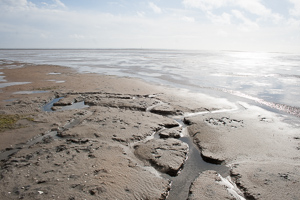
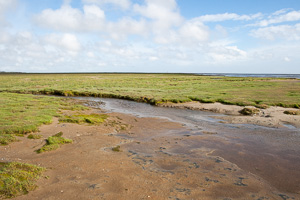
Within the framework of a collaborative project in the North Sea, we are studying effects of disturbance frequency on insect communities using artificial islands built in the German Wadden Sea.
Further information can be found on the BEFmate website.
Scaling of biodiversity in urban gardens and agricultural landscapes
PhD students: Kristy Udy (2013-2016), Hannah Reininghaus (2013-2016)
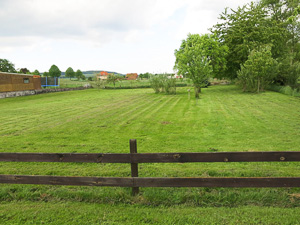
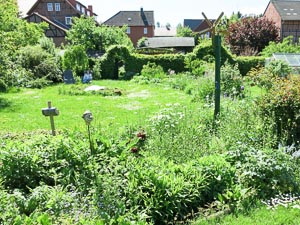
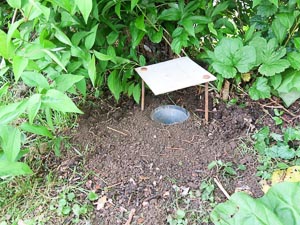
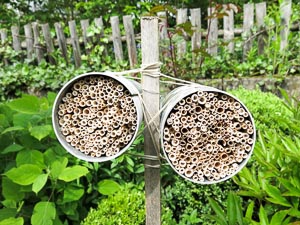
(photographs courtesy of Hannah Reininghaus and Kristy Udy).
We study effects of spatial and temporal scaling on insect communities (antagonistic vs. mutualistic interactions) within the framework of a DFG-funded research training group.
DFG-Research Training Group 1644 "Scaling Problems in Statistics"
PhD students: Kristy Udy (2013-2016), Hannah Reininghaus (2013-2016)
Urs Kormann (2010-2014), Tatiane Beduschi (2010-2014)
Spatiotemporal changes in landscape patterns and biodiversity
Using remote sensing data (RapidEye satellite), we study changes in landscape structure over time. We combine this approach to trace organism abundance and species number through space and time.
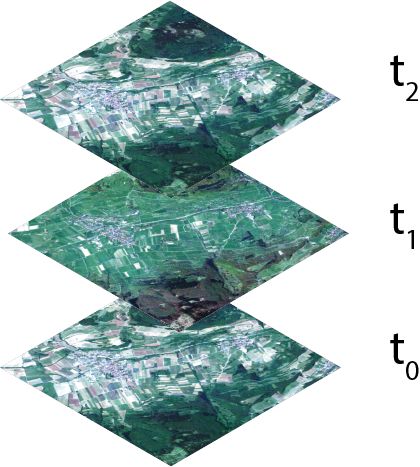
Image created by C. Scherber based on RapidEye multispectral imagery.
Studying organism abundance in whole landscapes
In a DFG-funded Research Training Group (Graduiertenkolleg 1644), we study Scaling Problems in Statistics. For example, we use a grid-based sampling approach on a landscape scale to estimate landscape-wide biodiversity.
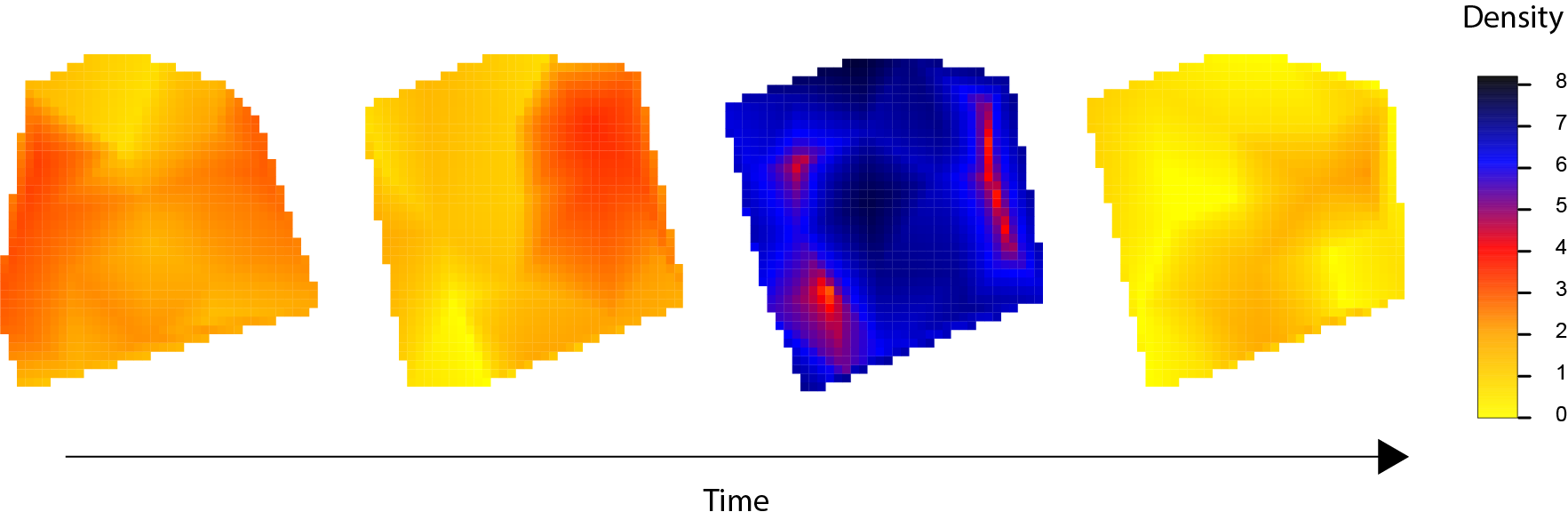
Biodiversity patterns in replicated landscapes
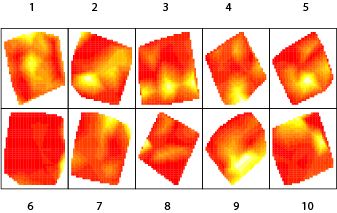
Using 10 different landscapes, each with a size of 1 km², we study the dynamics of insects in space and time. Note that the results show actual field data, interpolated using kriging. A heatmap colour scheme was used for graphical representation.
 Latest publication:
Scale effects in biodiversity and biological control: methods and statistical analysis
by Scherber C, Lavandero B, Meyer KM, Perovic D, Visser U, Wiegand K, Tscharntke T (2012).
Book Chapter in: Biodiversity and Insect Pests: Key Issues for Sustainable Management, First Edition. Edited by Geoff M. Gurr, Steve D. Wratten, William E. Snyder, Donna M.Y. Read. © 2012 John Wiley & Sons, Ltd. Published 2012 by John Wiley & Sons, Ltd. (in press).
Within the DFG-funded Research Training Group, we focus on two major questions:
(1) Scale dependence of plant-insect interactions and community structure in changing landscapes
Spatial processes play an important role in community and population ecology. For example, the immigration of individuals from different habitats in the surrounding landscape can be important for local community composition, a process that is termed mass effect. In addition, community composition may change across different spatial scales. This can have far-reaching implications for ecosystem services. For example, the effects of local complexity on local pollinator communities may be both high or low, depending on spatial scale (scale- and context-dependence). While previous studies of our group have shown that landscape context is an important determinant of biodiversity and ecosystem services, mechanistic insights into the underlying processes are lacking. In particular, the data collected so far do not allow explicit spatial modelling approaches, spatial interpolation, or the incorporation of spatial dependencies. In addition, data on dispersal rates of organisms are lacking so far. Here, we will study the scale-dependence of ecological communities in agricultural landscapes and organism interactions in the field. The description and the prediction of the intensity of a species, i.e., the abundance of organisms, will be based on the theory of random marked sets, a generalization of the theory of marked point processes.
1.1. Effects of landscape complexity and spatial scale on organism interactions We analyse dispersal, species richness, and abundance of focal organism groups using regular 1 × 1-ha grids positioned in 6 landscapes of different landscape complexity. At least 20 grid plots will be sampled per landscape. The identification of large quantities of invertebrates requires extensive expert support. GIS mapping and vegetation mapping will be central to explain the observed patterns and will serve as a basis for modelling. Vegetation leaf area index (LAI) and leaf nitrogen content will be predictors of vegetation density and attractiveness to herbivorous insects.
1.2. Dispersion of organisms in an agricultural landscape across different spatial scales We model the relationship between organism mobility, spatial landscape configuration and immigration in new habitat (mass effects), including Monte Carlo simulations.
(2) Scale and context mediated conservation management in fragmented landscapes and populations
Given a finite total area that can be set aside for conservation in human-dominated landscapes, what configuration would represent the best strategy? In contrast to prevailing arguments in favour of large habitats based on the classic theory of island biogeography, many small islands spread over a larger region may better capture a maximum of biodiversity. A sample of many reserves over a wider geographic range maximizes species richness, but in each of these small fragments, persistence of populations and ecological interactions are reduced. Reducing dispersal among habitats is similar to reducing gene flow to keep a maximum of breed diversity. In both cases, dissimilarity (of local communities or breeding populations) is conserved and thereby beta-diversity is maximized. This is in contrast to common views that, in order to maximize diversity, functional connectivity between spatially separated subpopulations should be increased, as this reduces probabilities of subpopulation extinction or allele loss. The outcome of conservation strategies is not trivial, as it depends on properties of the landscape (spatial configuration of fragments, and type of landscape matrix), species, and the resulting communities (food web interactions and ecosystem functioning). A systematic analysis of existing studies will be most valuable.
In addition, a spatially explicit multi-species model with stochastic birth, death, and dispersal processes is developed to analyse trade-offs between subpopulation persistence and beta-diversity for different landscape configurations and species groups. We will test the hypothesis that conservation value of population segregation and genetic exchange changes with fragmentation structure and scale.
We are interested in (i) developing a deeper theoretical understanding of the mechanisms using toy models and larger Monte Carlo studies; (ii) deriving optimal fragmentation strategies with respect to number and size of subpopulations and rate of geneflow between subunits that are relevant for animal conservation programs; (iii) field tests by repeated sampling (about 4) of several fragmentation levels (at least 10) in various landscapes (about 12), and model validation.
2.1. Conservation management in fragmented landscapes I An empirical test of the relative role of habitat area, fragmentation, and landscape matrix, using species differing in dispersal and specialisation has to be developed. Trapnesting bees and wasps, identified by extrenal experts, will serve as model systems to study fragmentation effects, supported by additional collections of organisms at different spatial scales.
2.2. Conservation management in fragmented landscapes II Development of spatially explicit models and analysis by means of Monte Carlo methods to clarify trade-offs in subpopulation persistence and beta-diversity.
2.3. Modelling of allele and haplotype dynamics in fragmented populations Here, theoretical optimisation of fragmentation patterns will be investigated. Genomic data of isolated chicken populations will be investigated.
4. Coexistence of species in populations with spatially structured interaction Analytical results on the parameter ranges will be obtained that allow for long term coexistence of species in interacting particle systems with different levels of local versus non-local competition.
Conservation Ecology
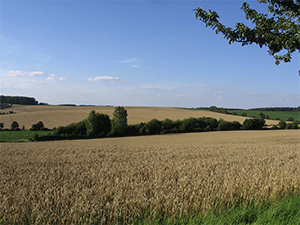
In several projects, we combine research with applied aspects, focusing explicitly on issues of biodiversity conservation.
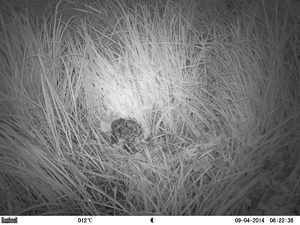
(1) We use camera trapping and artificial burrows to study circadian rhythms of European Hamster (Cricetus cricetus).
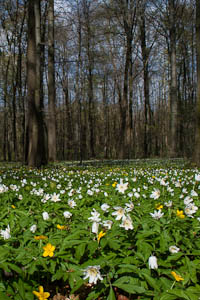
(2) In the Hainich National Park, we study if the size of the core zone of the National Park is sufficient to conserve typical forest species (plants, carabid beetles).
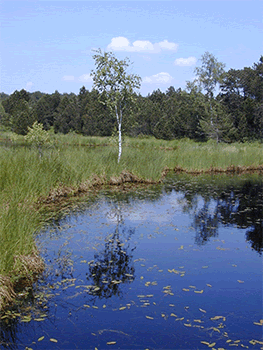
(3) In peat bog ecosystems in Southern Bavaria, we study effects of water level on endangered plants, for example the glacial relic species Betula nana.
(4) In collaboration with the Naturpark Meißner-Kaufunger Wald, we study plants, butterflies and leafhopper communities and how they are affected by land-use intensity. Using transect approaches, we study gradients ranging from the centre of each calcareous grassland out into other surrounding habitat types.
Cluster of Excellence "Functional Biodiversity research"
Grassland Management and biodiversity
PhD student: Georg Everwand (2010-2013)
MSc student: Till Benner
BSc students: Melanie Wiechmann, Annabelle Rohlfing, Wiebke Röper
Agricultural intensification is known to greatly influence biodiversity and multitrophic interactions, but the relative contribution of plant functional groups, e.g. herbs and grasses, to biodiversity is less understood. In a multidisciplinary approach with botanists, soil ecologists and phytopathologists, we characterize insect responses to fertilization, mowing and plant functional group composition in a grassland experiment. Management and plant community effects will be characterized by insect samples, quantification of herbivory and experimental phytometer studies, addressing responses of pollinators, herbivores and predators.
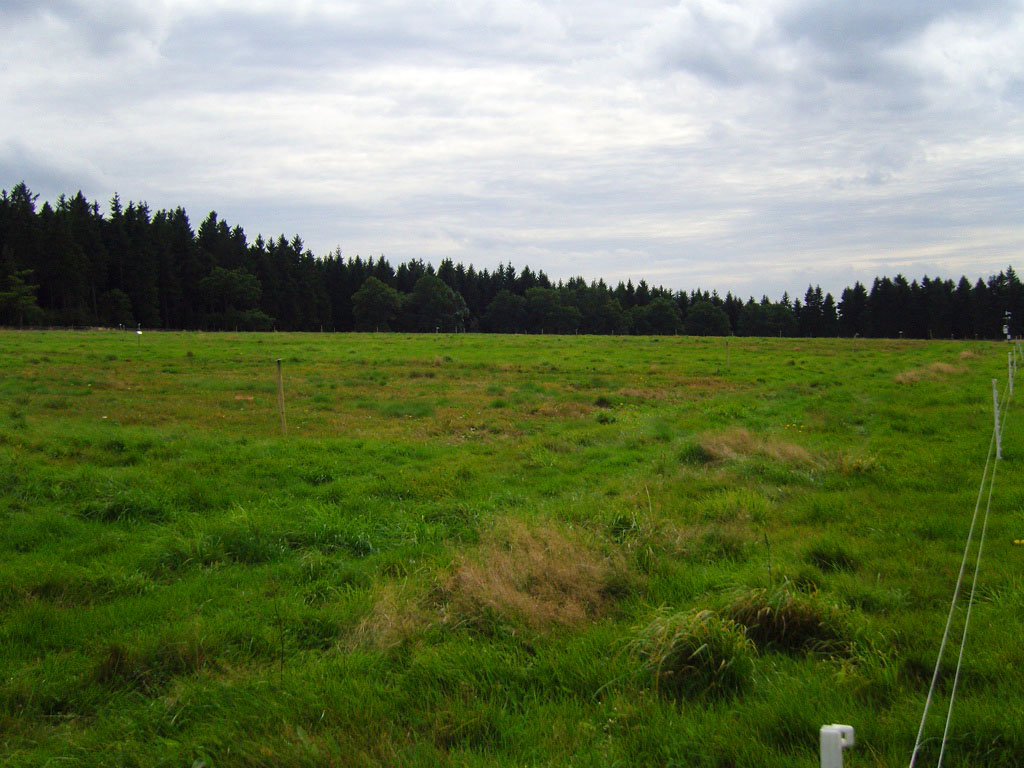
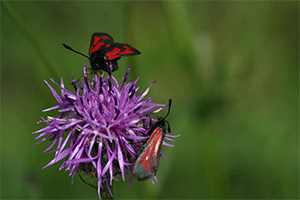
Image Copyrights: left: (C) C. Scherber; right: (C) D. Gladbach
Sampling invertebrates using non-attractive (colourless, transparent) pan traps
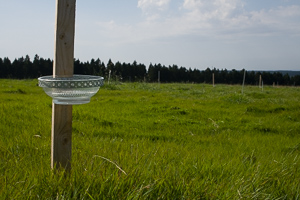
(Image copyright: C. Scherber)
Most recent publications:
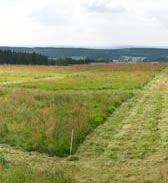
Slug responses to grassland cutting and fertilization in a plant functional group removal experiment
by Everwand G, Scherber C, Tscharntke T (2013)
Acta Oecologica 48:62–68.
DOI: http://dx.doi.org/10.1016/j.actao.2013.01.015
The CLIMAITE project (Denmark)
Effects of climate change on above-belowground multitrophic interactions
PhD student (co-supervised): David Gladbach (2007-2010)
We are currently collaborating with CLIMAITE, which is a Danish research centre to investigate how climatic changes will affect biological processes in natural (heathland) ecosystems. Specifically, studies involve aboveground invertebrates and herbivory measurements.
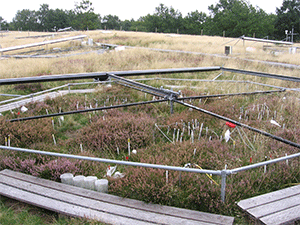
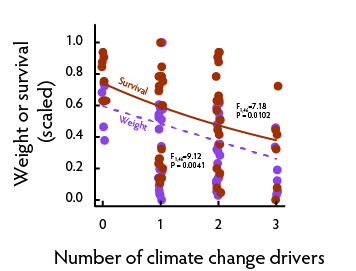
The number of climate change drivers affects herbivore performance
Among the most surprising findings of our studies was that the number of climate change drivers affected herbivore performance. That is: In some ways it doesn´t matter if drought or warming kick in - it´s just how many drivers act simultaneously that matters. See an enhanced figure from our Ecology & Evolution paper:
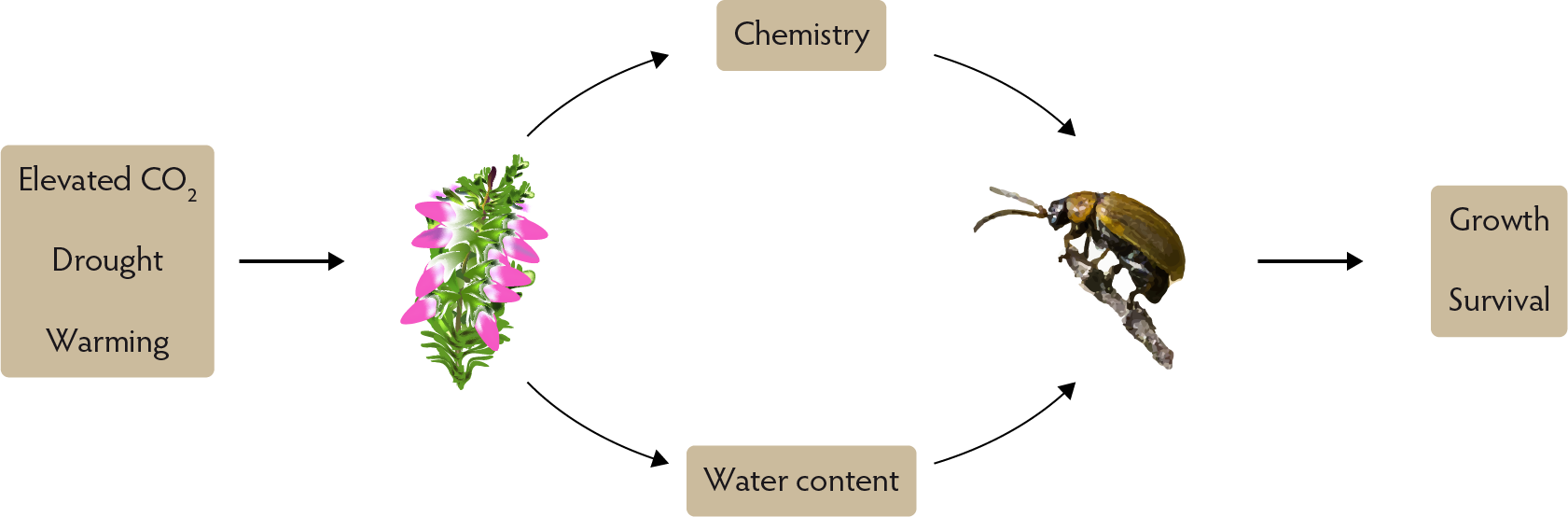
We show that insect herbivore performance (Lochmaea suturalis) is indirectly influenced by climate change via changes in plant quality, especially leaf tannin content and carbon-nitrogen ratio of Calluna vulgaris tissues.
Effects of climate change on above-belowground interactions
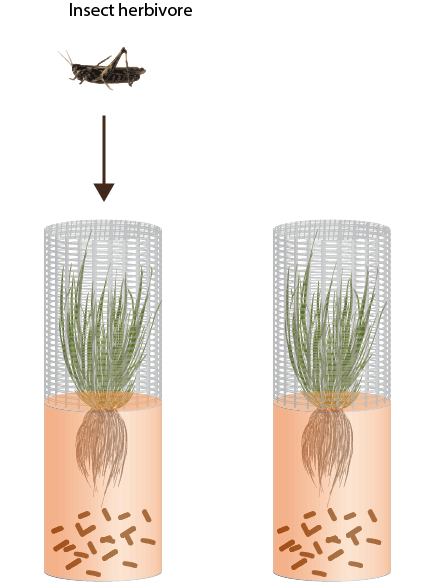
In another experiment, we show that above-belowground interactions are modified by climate change under field conditions. Our study is among the first proving that herbivory-induced nutrient cycling can be altered by combined climate change drivers (drought, warming, elevated CO2).
Most recent publications:
 Multi-factor climate change effects on insect herbivore performance
by Scherber C, Gladbach DJ, Stevnbak K, Karsten RJ, Schmidt IK, Michelsen A, Albert KR, Larsen KS, Mikkelsen TN, Beier C, Christensen S (2013)
Ecology and Evolution 3:1449–1460 (June 2013) DOI: http://dx.doi.org/10.1002/ece3.564
See also images published on Figshare:
Effects of the number of climate change drivers on herbivore performance. Christoph Scherber, David Gladbach, Karen Stevnbak, Rune Juelsborg Karsten, Inger Kappel Schmidt, Anders Michelsen, Kristian Rost Albert, Klaus Steenberg Larsen, Teis Nørgaard Mikkelsen, Claus Beier, Søren Christensen.
 Interactions between above- and belowground organisms modified in climate change experiments
by Stevnbak K(1), Scherber C(1)*, Gladbach D, Beyer C, Mikkelsen TN; S. Christensen (2012)
Nature Climate Change (published online 20th May 2012)
DOI: dx.doi.org//10.1038/nclimate1544
(1)equal contributions; *corresponding author
By experimentally manipulating atmospheric carbon dioxide concentration, drought, air and soil temperature, and herbivory simultaneously, this study provides evidence that climate change affects interactions between above- and belowground organisms through changes in nutrient availability under field conditions.
see also Supplementary Material
Further project details can be found here.
Biodiversity Exploratories
PhD student: Christoph Rothenwöhrer (2008-2011)
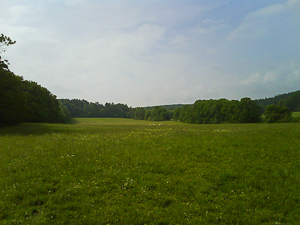
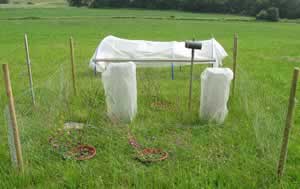
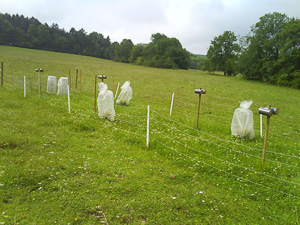
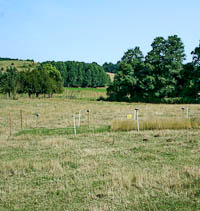
- The Biodiversity Exploratories are part of the international long-term ecological research (iLTER) network. In Germany, there are several such long-term ecological research projects. Within the framework of the Biodiversity Exploratories, we study ecosystem processes such as herbivory and pollination in selected grassland and woodland sites along land-use gradients.
Most importantly, we manipulated local-scale management by setting up electric fences to exclude grazing farm animals. We employed mowing treatments, and added phytometers crossed with complex predator exclusion treatments.
Most recent publications:
 Inter-annual variation in land-use intensity enhances grassland multidiversity
by Allan E et al. & Scherber C et al. (2013)
Proceedings of the National Academy of Sciences (in press)
Grassland management for stem-boring insects: Abandoning small patches is better than reducing overall intensity
by Rothenwöhrer C, Scherber C, Tscharntke T (2013)
Agriculture, Ecosystems and Environment 167:38–42
DOI: http://dx.doi.org/10.1016/j.agee.2013.01.005
 A quantitative index of land-use intensity in grasslands: integrating mowing, grazing and fertilization
by Blüthgen N, Dormann CF, Prati D, Klaus VH, Kleinebecker T, Hölzel N, Alt F, Boch S, Gockel S, Hemp A, Müller J, Nieschulze J, Renner SC, Schöning I, Schumacher U, Socher SA, Wells K, Birkhofer K, Buscot F, Oelmann Y, Rothenwöhrer C, Scherber C, Tscharntke T, Weiner CN, Fischer M, Kalko EKV; Linsenmair KE, Schulze ED, Weisser WW (2012)
Basic and Applied Ecology (published online 10 May 2012).
DOI: http://dx.doi.org/10.1016/j.baae.2012.04.001
General information about the Biodiversity Exploratories can be found here.
Project partners: Ingolf Steffan-Dewenter, Cathrin Westphal, Alexandra-Maria Klein, Jochen Krauss.
Associated PhD student: Juliane Steckel (Bayreuth)
DFG-GK 1086 Forest Biodiversity (Hainich National Park / UNESCO World Heritage site)
PhD students: Claudia Normann (2011-2014)
former PhD students: Elke Vockenhuber (2008-2011), Stephanie Sobek (2003-2006)
former MSc students: Marcel Mühlfeit (2013), Margaritha Hottmann (2013), Mareen Gollnow (2008)
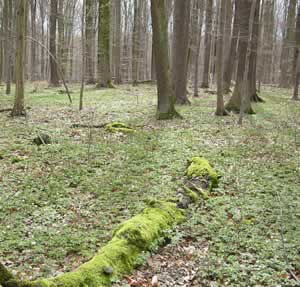
In this project, we study plant-insect interactions in a tree diversity gradient in the Hainich National Park (Germany). The work includes a quantification of a diversity of interactions and field experiments with a main focus on herbs.
In the current project phase, we focus on the effects of distance to the forest edge and tree species richness on plant and insect biodiversity.
The explanatory variables are
a) distance to the forest edge and
b) low vs. high tree species richness, laid out in a full factorial design along transects.
.JPG)
.JPG)
.JPG)
(all photographs by C. Scherber)
Most recent publications
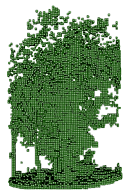
by Seidel D, Leuschner C, Scherber C et al. (2013)
Forest Ecology and Management 310: 366–374 DOI http://dx.doi.org/10.1016/j.foreco.2013.08.058
Plant-animal interactions in two forest herbs along a tree and herb diversity gradient
by Vockenhuber E, Kabouw P, Tscharntke T, Scherber C (2013)
Plant Ecology and Diversity (published online 6 March 2013)
DOI: http://dx.doi.org/10.1080/17550874.2013.782368
by Vockenhuber E, Scherber C, Seidel D, Langenbruch C, Meißner M, Tscharntke T (2011)
Perspectives in Plant Ecology, Evolution and Systematics 13:111-119 (published online 14th April 2011), DOI: dx.doi.org/10.1016/j.ppees.2011.02.004
Tree diversity drives abundance and spatiotemporal β-diversity of true bugs (Heteroptera)
by Sobek S, Gossner M, Scherber C, Steffan-Dewenter I, Tscharntke T (2009)
Ecological Entomology 34, pp. 772 - 782. DOI: http://dx.doi.org/10.1111/j.1365-2311.2009.01132.x
by Sobek S, Tscharntke T, Scherber C, Schiele S & Steffan-Dewenter I (2009)
Forest Ecology and Management 258 (5), 609-615, DOI: http://dx.doi.org/10.1016/j.foreco.2009.04.026
Spatiotemporal changes of beetle communities across a tree diversity gradient
by Sobek S, Steffan-Dewenter I, Scherber C & Tscharntke T (2009)
Diversity and Distributions 15 (4), pp.660 - 670, DOI: http://dx.doi.org/10.1111/j.1472-4642.2009.00570.x
by Sobek S, Scherber C, Steffan-Dewenter I, Tscharntke T (2009)
Oecologia 160(2): 279-88, DOI: http://dx.doi.org/10.1007/s00442-009-1304-2
Further project details can be found here.
Peat Bog Ecosystems
Restoration of peatland and conservation of the Dwarf Birch (Betula nana)
MSc student: Barbara Mayer (2010)
Since May 2010, we are studying plant-herbivore interactions along a drought gradient in a peat bog in Southern Bavaria (close to the towns of Seeshaupt and Bernried). In particular, we study the performance of the dwarf birch, Betula nana L. (Betulaceae), which is a glacial relict species. We monitor bog water level and follow plant performance over time.
Some of Germany´s most extensive peat bog ecosystems occur throughout Southern Bavaria (Germany). These bogs are fascinating environments that have been formed gradually after the last glaciations (about 10,000 years before today). Situated at the foothills of the Alps, many of these peat bogs (locally called "Filz") belong to the most vulnerable ecosystems in Germany, inhabited by often highly adapted species that can cope with the low pH of soil and water. I am personally interested in dragonflies, butterflies and herbivorous insects inhabiting peat bogs, as well as carnivorous plants, grasses, sedges and rushes, and Sphagnum peat mosses.
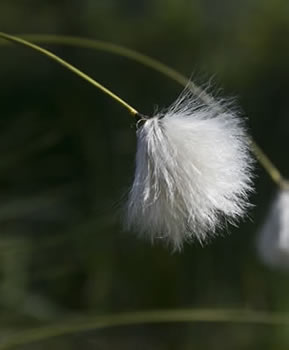
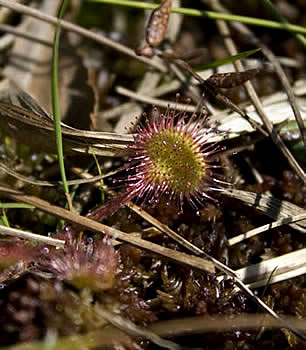
- (1) Eriophorum vaginatum in the "Murnauer Moos" (Southern Germany)
(2) Bog lake in a peat bog in Southern Bavaria (near Seeshaupt, Starnberger See)
(3) A leaf of the sundew, Drosera rotundifolia
Carnivorous Plants
Carnivorous Plants - please also see the book by Barthlott et al., for which I contributed some images of carnivorous plants.
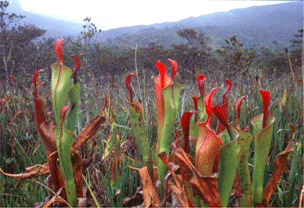
Heliamphora tatei on Pico da Neblina (Brazilian-Venezuelan Border), 1998.
Narrow-leaved Ragwort (Senecio inaequidens)
Biological control and management of invasive alien plants
MSc student: Kerstin Albrecht (2011; University of Rostock)
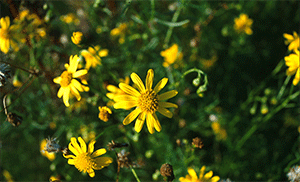
Narrow-leaved ragwort is an invasive alien plant introduced to Europe with wool transports from South Africa about hundred years ago. It is currently rapidly spreading across Europe. In a research facility at Silwood Park (UK), we have installed an experiment on the effects of herbivory and competition on S. inaequidens. Although the main results of the establishment phase have been published, some plants have survived from 2002 until today and are still producing inflorescences even though growing in intact British grassland. It will be fascinating to see if and how this plant will survive and reproduce over long-term periods.
Selected publications:
Scherber C., Crawley M.J., Porembski S. (2003) The effects of herbivory and competition on the invasive alien plant Senecio inaequidens (Asteraceae). Diversity and Distributions 9: 415-426, Blackwell Publishing, Oxford.
Scherber, C., Crawley M.J., Porembski S. (2004) Insect herbivory and plant competition studies on the invasive alien plant Senecio inaequidens (Asteraceae) under laboratory conditions. In: Kuehn, I. & Klotz, S. (eds.) Biological Invasions - Challenges for Science. Neobiota 3: 41-52, Berlin.
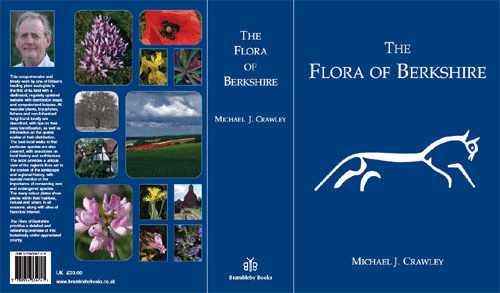
The experiments conducted at Silwood Park (UK) in 2002 have also been documented in the Flora of Berkshire, written by Michael J. Crawley, FRS
Hummingbird pollination
Collaboration with Oregon State University (Matthew Betts, Adam S. Hadley)
PhD student: Urs Kormann
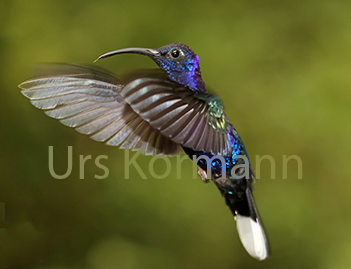
Within the framework of the DFG research training group "Scaling Problems in Statistics" we are studying hummingbird pollination in tropical forests in Costa Rica (Las Cruces station). Using artificial feeders positioned along fencerows, we study connectivity and pollinator movement among rainforest fragments.
Tank bromeliads
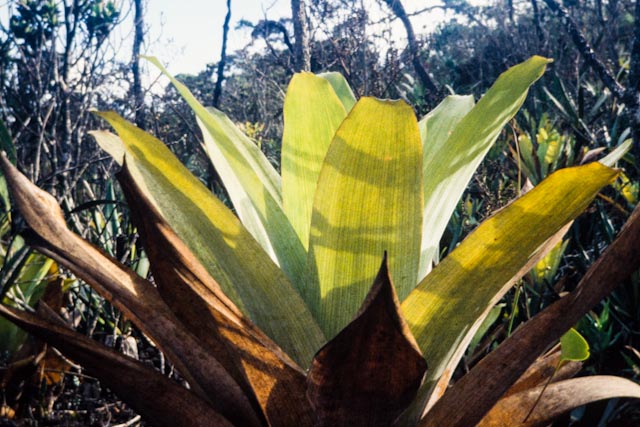
I have been involved in a DFG-funded project on tank bromeliads in the Neotropics:
Methane emissions from tank bromeliads in neotropical forests
by Martinson G, Werner FA, Scherber C, Conrad R, Corre MD, Flessa H, Wolf K, Klose M, Gradstein SR, Veldkamp E (2010)Nature Geoscience (Published online 17 October 2010), DOI: http://dx.doi.org/10.1038/ngeo980
Related content:
article: Biogeochemistry: Cryptic wetlands.
by Joseph B. Yavitt (2010), Nature Geoscience, DOI: dx.doi.org/doi:10.1038/ngeo999 (Published online 17 October 2010).
Works on carnivorous plants (Heliamphora, Drosera) in the Amazon basin (Mt. Neblina, Brazil/Venezuela)
(with F. Rivadavia Lopez, A. Wistuba, J. Nerz and others)
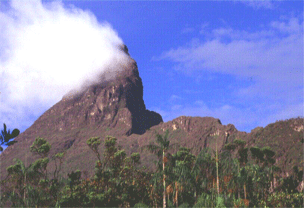
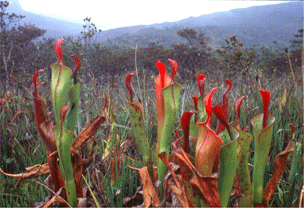
Nerz, J. & Wistuba, A. (2000) Heliamphora hispida (Sarraceniaceae), a new species from Cerro Neblina, Brazil-Venezuela". Carnivorous Plant Newsletter Volume 29, Number 2, June 2000, pages 37 - 41.
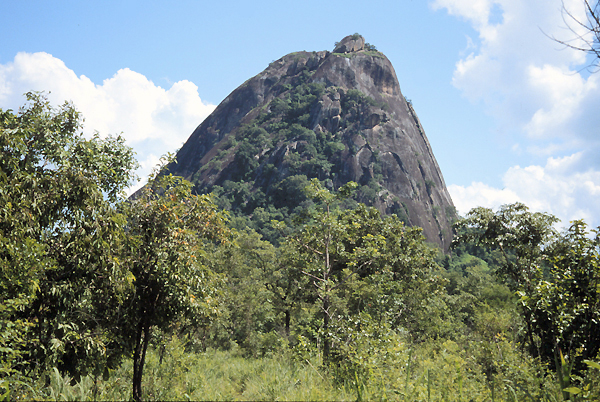
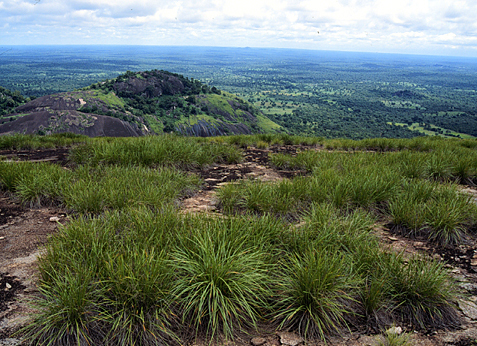
Gallery forest and Inselbergs in the Ivory Coast (West Africa)
(with S. Porembski, N. Biedinger and others, University of Rostock; Image credits: S.Porembski)
This was a short-term research stay in 2000, where we collected plant material and did vegetation relevés on inselbergs in the Ivory Coast. Among other plant species, we found the carnivorous plant species Genlisea stapfii, Utricularia subulata, Utricularia juncea and Utricularia pubescens (Lentibulariaceae) and Drosera indica (Droseraceae).
Side Projects
(1) Sciencegarden
From 2001-2008 I was a freelance writer for the journal "sciencegarden", a German young scientists´ on-line journal which has won a German nationwide Science Journalism prize in 2006 (the "Heureka"-award by Sanofi-Aventis)

- I have been involved in two side-projects, where I have been working together with psychologists on human facial attractiveness

(2) BEAUTYCHECK
(3) Public perception and genetically modified food
This study was part of a research competition for Young Scientists (Deutscher Studienpreis / German Students Award). More information can be found at www.studienpreis.de